Automatically translated from German. The German original is authoritative. German version
Does it have to be surgery?
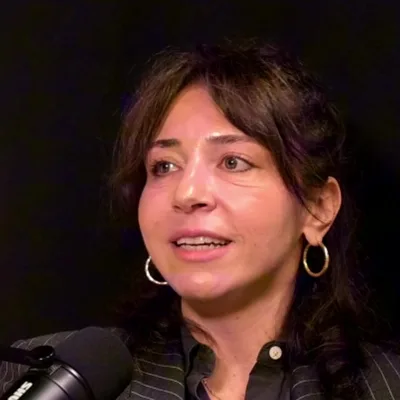
 Fibroids & Adenomyosis. With Dr. med. Cornelia Dewald, Senior Physician, Hannover Medical School. Hosted by Prof. Dr. Peter Minko.

The episode in 60 seconds
Fibroids are benign and very common. Between the ages of 45 and 50, over 60 percent of women have one or more. Not all of them cause symptoms.
For an accurate picture, Dewald recommends an MRI: no X-rays and it shows the position, size, and shape of every fibroid.
During fibroid embolization, the arteries to the fibroid are blocked via an access point of about 2 millimeters. The fibroid shrinks, and the uterus remains.
If you are offered surgery, you are allowed to ask for alternatives. A second opinion is worth it.
Fibroids and adenomyosis: Does the uterus have to be removed?
From episode 03 with Dr. med. Cornelia Dewald8 min read
"Just pull yourself together" Now playing
Peter Minko is familiar with this from his outpatient clinic: Many women with severe period pain and bleeding have heard sentences like "Just pull yourself together" for years. Cornelia Dewald has had the same experience. Some women were not initially taken seriously by their gynecologist either. That is a burden, often mentally as well.
„One person perceives mild pain as strong pain. Someone else might say in the face of strong pain: Well, it's manageable.“
Fibroids are benign tumors of the uterus. Benign here means: They have nothing to do with cancer. They are the most common benign tumor in women and become more common with age. Between the ages of 45 and 50, over 60 percent of women have one or more fibroids. Many do not notice them because not every fibroid is large enough to cause symptoms.
Which symptoms a fibroid causes depends on where it grows. If it presses on the bladder, there are problems with urination; if it presses on the rectum, there are problems with bowel movements. Increased bleeding and severe pain during the period are common. If the bleeding is very heavy over a long period, anemia can develop.
„Fibroids have nothing to do with cancer. These are benign tumors that are not dangerous. They are simply unpleasant.“
Fibroid or adenomyosis? Now playing
Adenomyosis is less well-known. The uterus is made up of layers. On the inside is the lining that is shed during the menstrual period, below that is the muscle layer. If tissue similar to the lining grows into this muscle layer, it is called adenomyosis.
„You can imagine fibroids like a ball. And adenomyosis is more like a lawn.“
Adenomyosis can also cause severe bleeding and pain. It presses on the bladder or bowel less often because it does not have a spherical shape. And it is more difficult to detect. That is likely one reason why hardly anyone knows the term.
How is it detected? Now playing
The first step is usually an ultrasound at the gynecologist, performed over the abdomen or through the vagina. This is a good way to see if there is anything abnormal at all.
For precise planning, Dewald recommends an MRI for every patient. It does not use X-rays, which is especially important for young women. And it shows which layer a fibroid is in, how large it is, whether it has a stalk, and whether it is growing inwards or outwards. Malignancies can also be better distinguished. A CT scan cannot do this in this part of the body in the same way.
„I would really recommend an MRI to every patient.“

Medication, surgery, or embolization Now playing
There are three paths. Medication can shrink fibroids and alleviate symptoms. If it is stopped, the fibroids usually grow back or the symptoms return. A young woman might have to take it for many years, until menopause, when symptoms usually subside.
During surgery, either only the fibroid is removed or, in cases of multiple or very large fibroids, the entire uterus. This is a major procedure. Pregnancy is no longer possible afterwards. And some women only realize afterwards how much the loss affects them emotionally.
The third path is uterine fibroid embolization, also known as uterine artery embolization. This procedure has been established for decades. Fibroids need a lot of blood to grow. They get it from the two uterine arteries, one on each side. Using a catheter, tiny plastic particles in the micrometer range are specifically placed into these arteries until no more blood flows to the fibroid. The fibroid reacts more sensitively to this than the rest of the uterus. It shrinks, the uterus remains.
„The fibroids are supplied with blood, otherwise they couldn't grow at all.“
How the procedure works Now playing
„There is no large incision, just a very small hole.“
Usually admitted the day before: blood draw and a detailed consultation.
Local anesthesia in the groin. General anesthesia is not necessary. You can talk or listen to music.
An incision of about 2 millimeters, thinner than a spaghetti noodle. The catheter is guided through it into the uterine arteries.
Afterwards, a pressure bandage and some bed rest. Eating and drinking are allowed.
Pain medication is given from the beginning according to a fixed schedule because the fibroid would react to the lack of blood flow with pain.
About three to four days in the hospital. If you feel better sooner, you can go home earlier.
What speaks for it and what speaks against it Now playing
The main argument for embolization is what is missing: a large incision and therefore internal scars. Adhesions can occur after abdominal surgery, but not after embolization. You recover faster, stay in the hospital for a shorter time, and can repeat the procedure if necessary.
Fibroids that do not cause symptoms are not treated. And rarely, the vessels of the uterus and ovaries are so closely connected that Dewald forgoes embolization to avoid endangering the ovaries.

In her clinic, the success rate is about 80 percent, says Dewald. New fibroids can still form later. This is the same after surgery, and an embolization can be repeated. Large fibroids can also be embolized. Caution is exercised with pedunculated fibroids that grow into the abdominal cavity.
„In our practice, we have a success rate of around 80 percent.“
Why do so few people know about this treatment? Now playing
When experiencing symptoms, women first go to their gynecologist. Naturally, they recommend the procedures of their own specialty first. Things get better where gynecology and radiology work together in fibroid centers. Many patients still find their way to embolization through their own research.
„Gynecologists are, of course, just as enthusiastic about their therapeutic procedures as we are about ours.“
Myth or truth? Now playing
Finally, Peter Minko has brought statements that Cornelia Dewald hears time and again. What do you think?



Next
Same question, other experts
Surgery or radiology?
2 experts answer
Why interventional radiology?
3 experts answer

What can interventional pain therapy achieve?
Treating pain in a targeted manner
 Dr. med. Elif Can, M.A.

 Dr. med. Alexander Loizides

 Prof. Dr. med. Thomas Helmberger