Automatically translated from German. The German original is authoritative. German version
What can interventional radiology do?
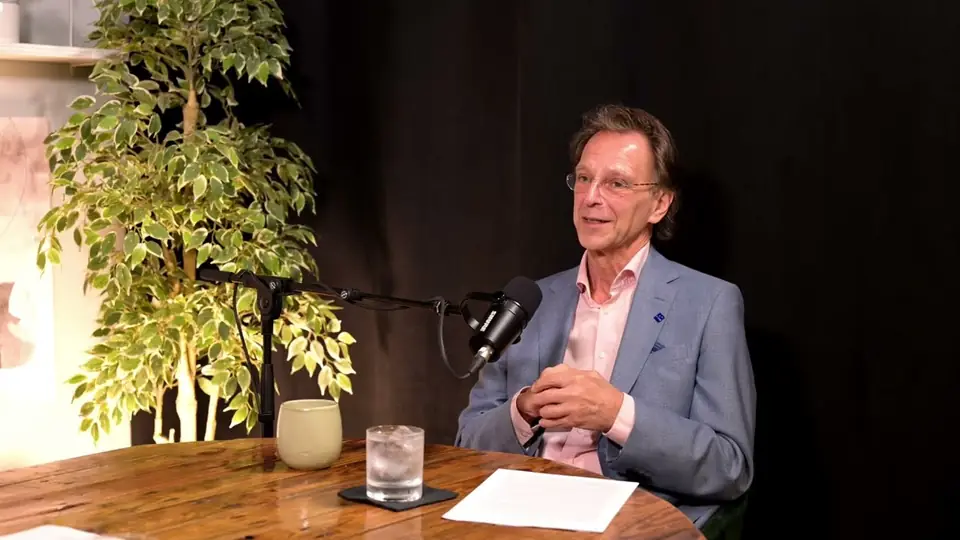
 More than just images. With Prof. Dr. med. Thomas Helmberger, Interventional radiologist from Munich. Hosted by Prof. Dr. Peter Minko.
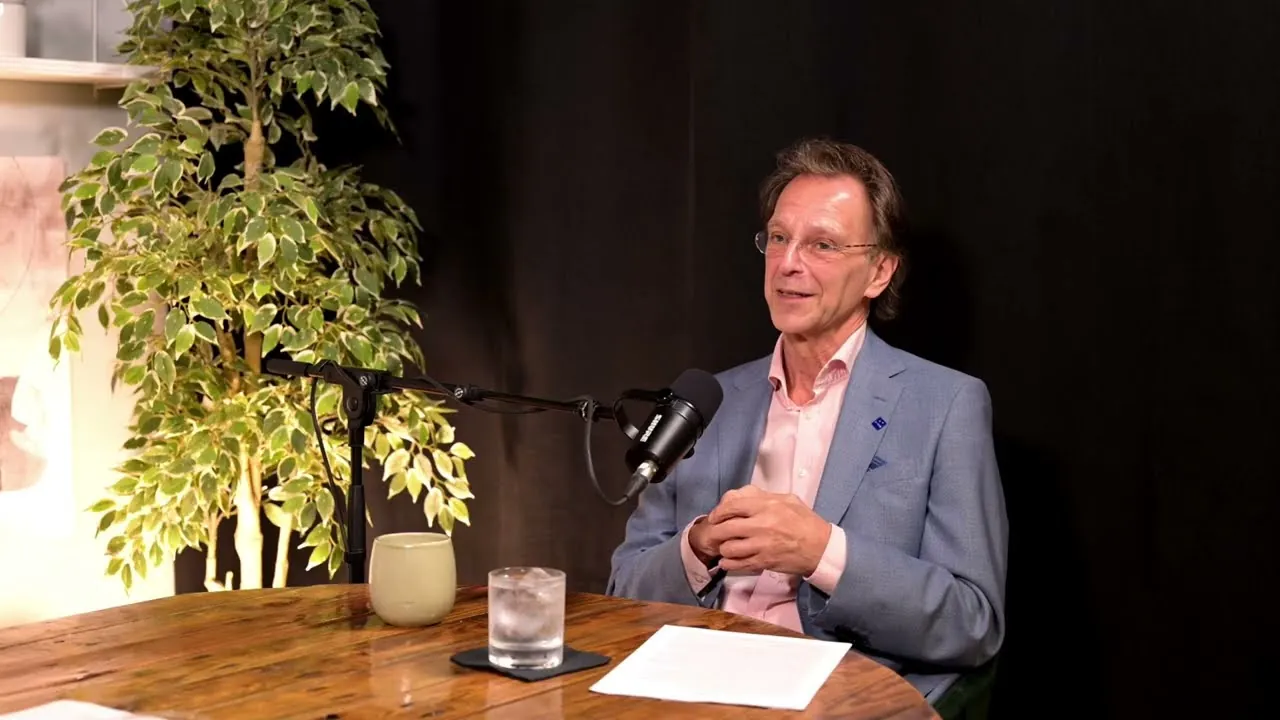
The episode in 60 seconds
Interventional radiologists treat through a small nick in the groin or wrist, guided by images. No large incision is necessary for this.
Usually, a local anesthetic is sufficient. If you wish, you can receive something to help you relax.
The spectrum ranges "from head to toe": strokes, narrowed leg arteries, bleeding, tumors in the liver, tissue biopsies.
A small liver metastasis can often be treated in a few minutes with microwaves, without general anesthesia. By the afternoon, you are back on the ward.
What is interventional radiology? More than just images
From episode 01 with Prof. Dr. med. Thomas Helmberger8 min read
"Oh, you're the heart people?" Now playing
When Thomas Helmberger mentions at a party that he is an interventional radiologist, he often gets the same answer: "Oh, you're the heart people?" No, he replies, we helped invent that, but we are the others. It is not radiotherapy either.
Most people are familiar with X-rays, CTs, and MRIs. Interventional radiologists use these images to treat. Through a small nick in the groin or wrist, they access vessels and organs. They take tissue samples without cutting the body open, and treat directly within the tissue via the vessels.
„Many people don't realize that we are actually the problem solvers.“
What happens on the table Now playing
Planned procedures do not start on the table, but with a detailed conversation. Often, several specialists have consulted together beforehand. Helmberger always keeps catheters and needles in his desk and hands them to his patients. A microcatheter measures 0.6 millimeters. By then at the latest, the ice is broken.
„I always keep catheters and needles in my desk. That is all you will see.“
The procedure itself is performed under sterile conditions, just like in the operating room. The puncture site is locally anesthetized; there is no need for general anesthesia. If you are nervous, you can receive something to relax. The contrast medium that makes the vessels visible feels warm. In case of weak kidneys, CO₂ can be used instead.
One example is peripheral artery disease: A narrowed leg artery only allows for short distances. A hair-thin wire passes through the constriction, followed by a balloon catheter. The balloon is inflated with liquid, at 8 to 10 bar. If the vessel does not remain open afterwards, a stent, a fine metal mesh, provides support.

From head to toe Now playing
There is hardly any part of the body that interventional radiologists cannot reach. Even the vessels in the lower leg, measuring 1 to 1.5 millimeters, are accessible. And in emergencies, every minute counts, such as with a stroke: A tiny retrieval device is used to remove the clot from the brain artery.
Treating cancer without a large incision Now playing
Helmberger talks about a well-known Munich resident with liver cancer for whom chemotherapy did not help. His family doctor sent him for a second opinion. The tumor was limited to a nodule and could be treated specifically: with internal radiation therapy, where radioactive beads are delivered via a catheter directly into the tumor's vessels. This spares the rest of the liver.
Small liver metastases can be treated with heat. A thin probe is inserted through the skin, and microwaves "cook" the tumor. According to Helmberger, this takes eight to nine minutes for a 2-centimeter metastasis, without general anesthesia. By the afternoon, patients are back on the ward. The guideline recommends the least invasive procedure for such cases, he says.
„No patient asks about progression-free survival. They ask: How long do I have left to live, and how will I feel doing so?“
Further examples from the conversation: the osteoid osteoma, a painful benign bone tumor that, according to Helmberger, should hardly be operated on anymore. And ports, small access points under the skin for long-term therapies.
Why hardly anyone knows the specialty Now playing
For Helmberger, this has a lot to do with the old self-perception of radiology. For a long time, the radiologist sat in their "cave" and looked at images. You couldn't even enter some X-ray departments, and reports came back handwritten. Surgeons and oncologists were visible to patients; radiologists were not.
In addition, there are incentives in the healthcare system that reward what generates revenue rather than asking how patients are doing afterwards. The professional society DeGIR now maintains a nationwide quality registry in which procedures, successes, and complications are documented.
AI, robots, and a plan up to Z Now playing
Artificial intelligence has been used in radiology for years to recognize patterns. It is becoming more important because the flood of images is growing. In the past, an abdominal examination fit on 96 images. Today, a CT scan can quickly produce 6,000 images per examination, which must be compared with previous scans. This is only possible with technical assistance.
Software is already helping with procedures today: Modern systems show the best path to the tumor as a line that you can follow. Robots could one day make procedures possible from a distance. Whether this will catch on is also a question of costs for Helmberger.
And how do you prepare for a difficult procedure? Like a race car driver who walks the track beforehand: Helmberger plays the procedure through in his head before he steps up to the table.
„You need not only a plan A, but up to plan Z.“
Peter Minko calls him the architect of interventional radiology at the end. Fittingly: If Helmberger hadn't become a doctor, he would probably have been an architect.
Next
Same question, other experts
How does a treatment work?
3 experts answer
What can be treated?
4 experts answer
What can interventional pain therapy achieve?
Treating pain in a targeted manner
 Dr. med. Elif Can, M.A.
 Dr. med. Cornelia Dewald
 Dr. med. Alexander Loizides