Automatically translated from German. The German original is authoritative. German version
What can interventional pain therapy achieve?
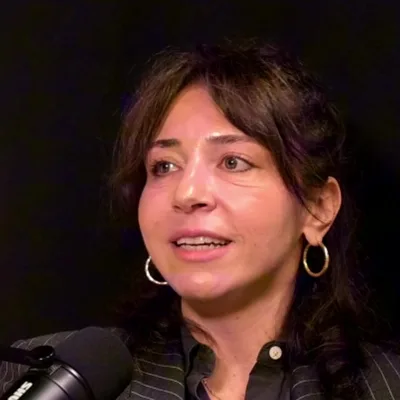 Treating pain in a targeted manner. With Dr. med. Elif Can, M.A., Senior Physician in Interventional Radiology in Freiburg. Hosted by Prof. Dr. Peter Minko.

Episode 04 · 71 min
The conversation is in German.
The episode in 60 seconds
Thin needles reach nerves under CT or ultrasound guidance. Catheters reach the target area via blood vessels.
A test block with local anesthesia can help to isolate the source of pain. The effect of the medication wears off again.
In the case of pudendal neuralgia, changes are not necessarily visible on an MRI. Symptoms and the reaction to a block play an important role.
There are encouraging studies on joint embolization. Open questions, the placebo effect, and limitations in cases of severe wear are part of the assessment.
Treating pain in a targeted manner: What needles and catheters can achieve
From episode 04 with Dr. med. Elif Can, M.A.5 min read
A long path to help Now playing
Many people live with pain for a long time and go from one medical specialty to the next. Elif Can describes how burdensome this search can be. For the interventional radiologist, treatment therefore involves more than just the procedure: She wants to understand the symptoms and accompany the people. Even if she cannot offer a suitable procedure herself, her task does not end.
„We have to see which medical department I can refer you to, so to speak.“
Two paths to the target region Now playing
The tools are small: thin hollow needles and fine plastic tubes, known as catheters. CT or ultrasound help guide a needle precisely to the selected structure. Catheters are advanced through blood vessels under image guidance.
The target structure is identified based on symptoms and imaging.
The hollow needle is placed under image guidance; subsequently, its sharp inner core is removed.
Through the needle, contrast medium for verification or medication can be administered.
Test first, then decide Now playing
In the case of nerve pain, a local anesthetic can initially show whether the suspected structure is actually contributing to the pain. You are awake during this and can provide feedback. The effect of this test block is temporary. Depending on the situation, repeated blocks or procedures that denervate selected nerve structures using heat, cold, or medical alcohol are options.
In the case of tumor pain, the tumor itself or its supplying blood vessels can also be treated. Elif Can mentions heat, cold, and targeted vessel occlusion. She rates the data on the local treatment of tumor pain as good.
Pelvic pain that is not visible on images Now playing
Elif Can tells of a young doctor with pudendal neuralgia, i.e., pain in the area of the pudendal nerve in the pelvis. Intercourse and cycling were painful, daily life suffered, and his relationship fell apart. He had sought help from various medical specialties. In an MRI, there is not necessarily anything abnormal to be seen with this condition.
In the described case, the nerve was blocked under CT guidance. The patient felt immediate relief, hugged a staff member, and cried. Later, he returned about every three months for another block. It is an individual case history, not a guarantee for other patients.
When the knee continues to hurt Now playing
Another patient continued to have pain despite having an artificial knee joint. Using his example, Elif Can explains joint embolization: small, newly formed blood vessels in the painful area are specifically closed off via a catheter. The procedure is also used for osteoarthritis without an artificial joint. In this, radiology works together with orthopedics.
Encouraging data, but no panacea Now playing
Peter Minko reports on a summary of studies to date with good results. At the same time, he emphasizes the high placebo effect in osteoarthritis and the importance of controlled studies. Elif Can describes joint embolization as a relatively young procedure. In cases of very advanced wear, when bone meets bone and the joint axis is significantly changed, she sees limits.
Physiotherapy and other accompanying measures remain part of the treatment. The goal is also personal: for some people, even partial pain reduction represents an important improvement. A pain scale helps with comparison before and after therapy but does not capture every individual experience.
Why the options often remain unknown Now playing
According to Elif Can, the procedures are often found at specialized centers and are not in view everywhere. She also sees radiology as having a responsibility to make its options more visible. Peter Minko describes the specialty as a bridge between different medical fields: findings can be consolidated and appropriate treatment paths shown. Pain medicine remains a joint task.
Myth or truth? Now playing
To conclude, Elif Can assesses common statements: about unremarkable MRI scans, cortisone, opioids, general anesthesia, and artificial knee joints.
Next
Same question, other experts
How does a treatment work?
3 experts answer
Why interventional radiology?
3 experts answer
What can be treated?
4 experts answer

 Dr. med. Cornelia Dewald
 Dr. med. Alexander Loizides
 Prof. Dr. med. Thomas Helmberger